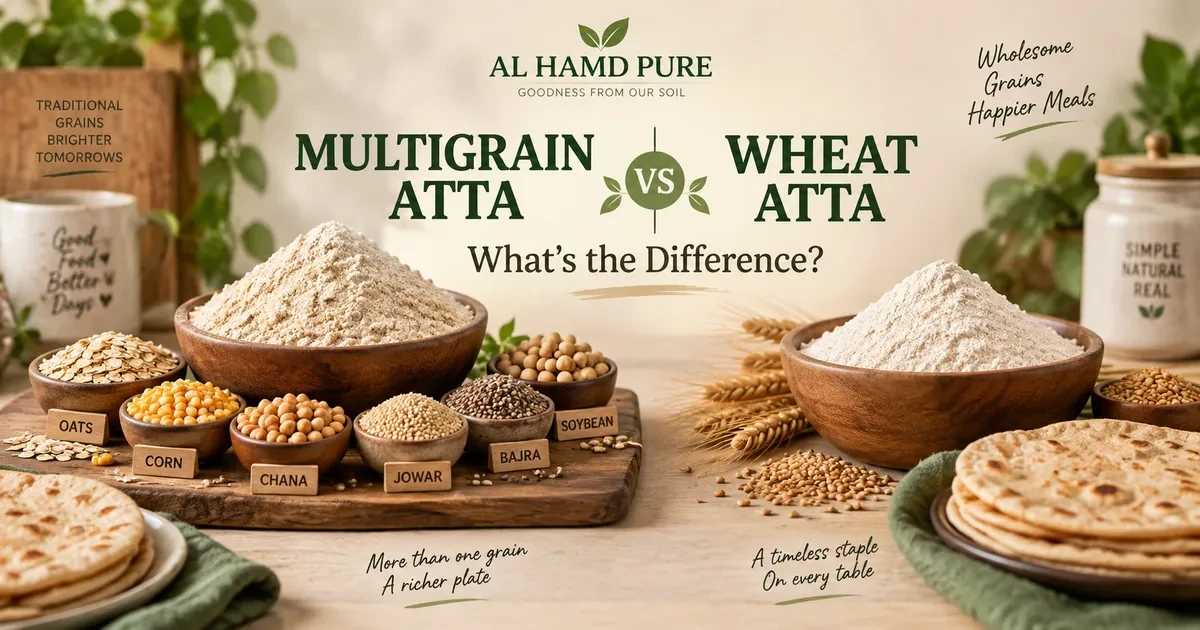
Standing in the flour aisle, most of us have wondered the same thing: is multigrain atta really better than wheat atta, or is it just clever packaging? If you want healthier rotis without giving up the taste, softness, or tradition of a family meal, this guide is for you.
For generations, whole wheat atta (gehun ka atta) has been the undisputed staple of our kitchens. But as health consciousness rises, more families are looking to add variety and extra nutrition to their daily meals. Below, we compare multigrain atta vs wheat atta on fiber, protein, blood sugar impact, gluten, and taste—so you can pick the right flour for your family.
The Quick Answer
If you are short on time, here is the summary:
- Multigrain atta blends wheat with other grains and legumes. Done well, it can provide a wider range of nutrients, fiber, and protein than plain wheat atta.
- Whole wheat atta is made from a single grain. It gives the softest, most elastic dough and the most familiar roti taste.
- The blend matters most. The word "multigrain" isn't strictly regulated. A pack labelled "multigrain" might still be mostly wheat. Always check the ingredient list and the quantities to ensure you are getting real value.
What’s the Real Difference?
Whole wheat atta is made by grinding the entire wheat kernel—including the bran, germ, and endosperm. This retains natural fiber, B vitamins, and minerals. It is fantastic for providing sustained energy and soft rotis, but its limitation is that it is a single-grain flour.
Multigrain atta, on the other hand, is a carefully formulated blend of wheat combined with other cereals, millets, and pulses like barley, oats, and chana (gram). The idea is simple: every ingredient brings something different to the table. You get soluble fiber from barley and oats, plant protein from chana and soybean, and essential minerals from millets.
Here is a general side-by-side comparison of how they stack up:
Feature Whole Wheat Atta Multigrain Atta (Quality Blend) Made from One grain: wheat Wheat plus several grains, millets, and pulses Fiber Good, mostly insoluble May provide a mix of soluble and insoluble fiber, depending on the blend Protein Moderate May be higher if the blend includes legumes like chana or soybean Blood Sugar Impact Medium to high glycemic response May have a gentler impact if the blend contains barley, oats, or legumes Nutrient Variety Narrower Often offers a wider range of minerals and vitamins Taste & Texture Mild, soft, elastic Nutty, earthy, slightly denser (needs good kneading) Best for Everyday soft rotis, parathas, puris Daily rotis for families looking to add dietary variety(Note: Exact nutrition depends entirely on the specific blend, milling process, and brand. You should always check the nutritional label.)
The Al-Hamd Pure Difference: Transparency in Every Bite
It is important to know what goes into your flour. We built our multigrain atta to be wheat-forward so your rotis stay soft, while giving you the benefit of a carefully portioned eight-ingredient blend of grains and legumes.
Here is exactly what goes into a 5kg pack (recalculated for 100% accuracy):
Ingredient Quantity (per 5kg) Percentage Key Nutritional Role Wheat (Gehun) 3,200 g 64.0% The soft base; provides fiber, B-vitamins, and energy. Barley (Jau) 500 g 10.0% Contains beta-glucan, a soluble fiber. Chana (Gram) 333.5 g 6.7% Plant-based protein and fiber. Oats 266.5 g 5.3% Soluble fiber that promotes fullness. Jowar (Sorghum) 233.5 g 4.7% Traditional millet rich in antioxidants. Bajra (Pearl Millet) 166.5 g 3.3% A classic grain known for its mineral content. Corn (Maize) 166.5 g 3.3% Adds natural sweetness and energy. Soybean 133.5 g 2.7% High-quality plant protein.With about two-thirds wheat, the dough stays easy to knead and roll. The remaining third adds fiber, protein, and variety to every single roti. Explore Al-Hamd Pure Multigrain Atta.
5 Health Considerations When Making the Switch
Why should you consider making the switch? Beyond the variety, here is what a quality multigrain blend can do for your diet:
1. Multigrain Atta and Blood Sugar: What to Know
Regular wheat atta has a moderate to high glycemic response. However, blending wheat with ingredients like barley, oats, and chana—which digest more slowly—may result in a gentler blood sugar response compared to refined flours.
Important: Blood glucose response depends heavily on your portion size, how the roti is prepared, and what you eat alongside it (like dal, vegetables, and yogurt).
2. A More Balanced Protein Profile
Wheat is naturally low in an amino acid called lysine. Legumes like chana and soybean are rich in it. By blending them, you can create a better-balanced protein profile, which is essential for muscle repair and keeping you full.
3. A Mix of Fibers for Digestion
Multigrain atta offers a diverse range of fibers. The soluble fiber from oats and barley, combined with the insoluble fiber from wheat bran, supports healthy digestion and helps maintain a healthy gut. If you are not used to a high-fiber diet, introduce multigrain atta gradually and drink plenty of water.
4. More Micronutrient Variety
Each ingredient brings its own micronutrients. While wheat offers B-vitamins, Bajra and Jowar add a variety of minerals, and Oats add magnesium. A single-grain atta can’t offer that same diversity in one bite.
5. Satiety and Portion Control
Foods rich in fiber and protein generally keep you feeling fuller for longer. While no atta causes weight loss on its own, multigrain rotis can help reduce the urge to snack between meals, making it easier to stick to sensible portions.
Worried About the Taste? How to Make Soft Multigrain Rotis
The most common concern is texture. When you replace part of the wheat with millets or oats, the dough becomes a little less elastic. At Al-Hamd Pure, our 64% wheat base ensures you still get soft, pliable rotis. To get the perfect result at home, follow these tips:
- Use warm water and add it gradually. Multigrain atta absorbs water more slowly.
- Knead for 8 to 10 minutes until the dough is smooth and pliable.
- Rest the dough for 20 to 30 minutes under a damp cloth. This lets the fiber hydrate and makes rolling much easier.
- Transition gradually: If your family is used to regular atta, mix half regular wheat atta with half multigrain atta for the first week.
Any Downsides? Who Should Be Careful
While multigrain atta is a great addition to a balanced diet, there are a few things to keep in mind:
- Gluten: A multigrain atta that includes wheat and barley is not gluten-free. It is unsuitable for anyone with celiac disease or a gluten-related disorder that requires a strict gluten-free diet.
- Soy Allergies: Many blends (including ours) contain soybean. Always check the allergen label.
- Storage: Because ingredients like oats and maize contain natural oils, multigrain atta should be stored in an airtight container in a cool, dry place. Check your specific pack for the best-before date.
Frequently Asked Questions
Is multigrain atta better than whole wheat atta for everyday rotis?
For most people looking for more dietary variety, fiber, and protein, a well-made multigrain atta is a nutritious upgrade. However, whole wheat atta remains a healthy staple and is best if you prioritize the softest, most elastic dough for special dishes like parathas.
How do I choose a good multigrain atta in Pakistan?
Read the ingredient list carefully. Look for a brand that clearly lists the proportions of each ingredient. A wheat-forward blend (around 60-70% wheat) rolls out more easily while still offering variety. Avoid brands that use maida (refined flour) or artificial additives, and check the packing date for freshness.
Is multigrain atta good for weight loss?
It can support a healthy diet because fiber and protein help you feel full. However, portion size, overall daily calories, and physical activity matter most. No single food causes weight loss on its own.
Is multigrain atta good for diabetics?
It is generally considered a better everyday choice than refined flour due to its fiber content and potentially gentler glycemic response. However, it still contains carbohydrates. If you have diabetes or pre-diabetes, consult your doctor or dietitian to determine the right portion size for your needs.
Is multigrain atta gluten-free?
No. Because it contains wheat and barley, our multigrain atta contains gluten. Only flours made entirely from gluten-free ingredients and labelled as such are suitable for a celiac diet.
The Final Verdict: Upgrade Your Family's Meals
The multigrain atta vs wheat atta debate isn’t about one being "bad" and the other "good." Wheat atta is a trusted, versatile staple. But if you are looking to maximize your daily nutrition without changing your eating habits, a quality multigrain atta is a fantastic choice.
Experience the wholesome goodness of our 8 carefully selected ingredients with Al-Hamd Pure Multigrain Atta—milled for perfection and packed for freshness.
👉 Shop Al-Hamd Pure Multigrain Atta Now
Author Bio:Muhammad Burhan is the founder of Al-Hamd Pure and is passionate about bringing transparent, high-quality, and nutritious food staples to Pakistani families. (Note: If a nutritionist reviews this, add their name and qualifications here).
References:
- American Diabetes Association - Understanding carbohydrates. (https://diabetes.org/food-nutrition/understanding-carbs)
- NIDDK - Celiac Disease: Eating, Diet, and Nutrition. (https://www.niddk.nih.gov/health-information/digestive-diseases/celiac-disease/eating-diet-nutrition)
- Google Search Central - Creating helpful, reliable, people-first content. (https://developers.google.com/search/docs/fundamentals/creating-helpful-content)
Disclaimer: This article is for general informational purposes only and is not a substitute for professional medical advice. If you have diabetes, celiac disease, a food allergy, or another health condition, please consult your doctor or a registered dietitian before changing your diet.
